What began as unease over a proposed reduction from four professional sides to three has escalated into open revolt, as senior political figures, grassroots clubs and leading business voices question not only the strategy but the leadership driving it.
At the centre of the storm is WRU chair Richard Collier-Keywood, who is facing mounting calls to step down.
Among the most prominent critics is Hayley Parsons, one of Wales’ most successful entrepreneurs and a former Cardiff Rugby board member, who has written to clubs nationwide urging swift action to force change through an extraordinary general meeting.
READ MORE: Swansea RFC Pour More Cold Water on WRU Ospreys Plan
The WRU has entered a 60-day exclusivity agreement with Y11 Media and Sport, the ownership group behind the Ospreys, as part of plans to reshape the professional game.
The governing body wants one team in the east, one in Cardiff and one in the west, arguing that finances and playing resources are currently stretched too thin.
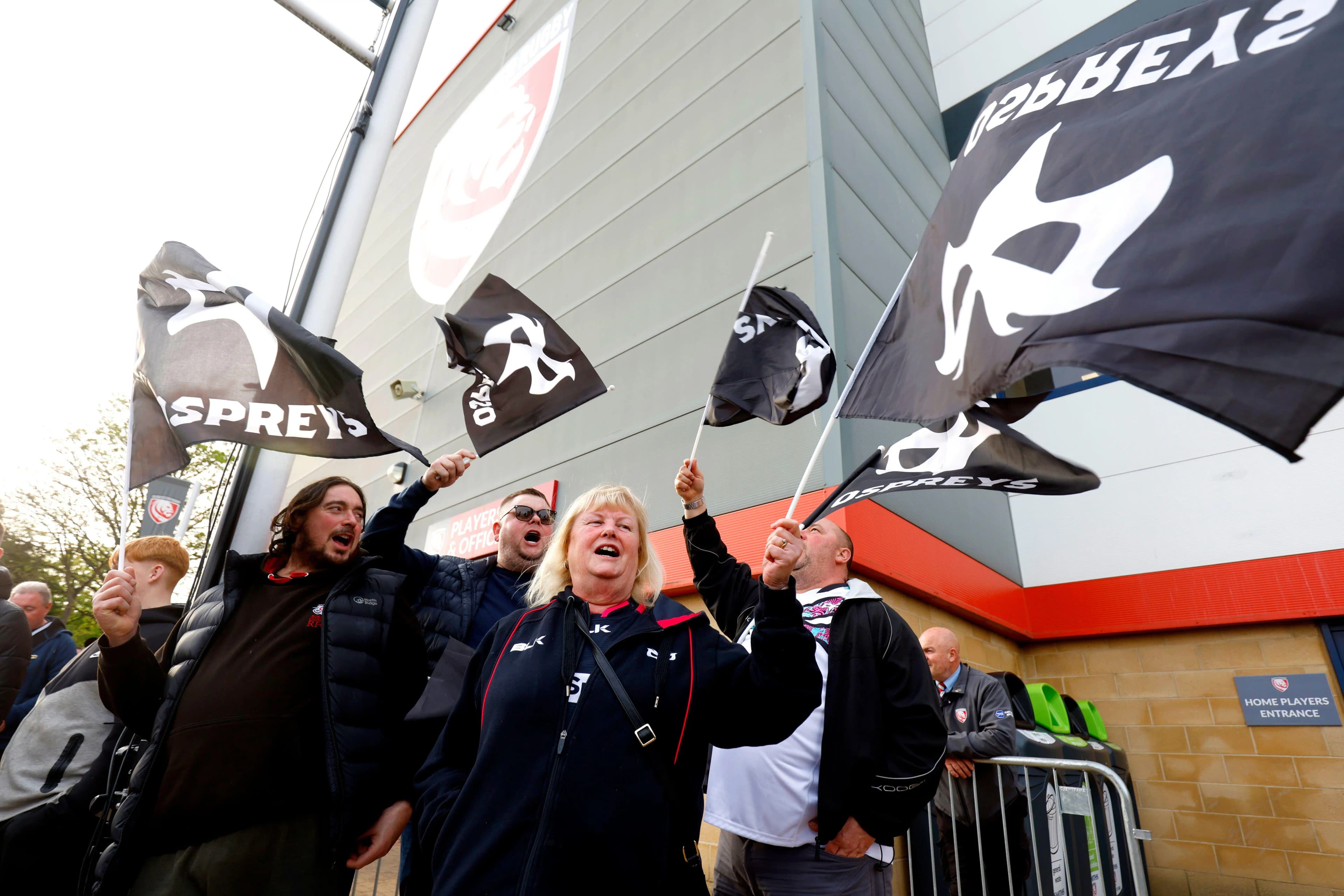
But uncertainty over the Ospreys’ long-term future — with only a short-term commitment in place — has fuelled anger in Swansea, Bridgend and Neath, amid fears the WRU’s secret plan is for that region to be sacrificed.
Opposition has not been confined to the terraces.
Swansea Council leader Rob Stewart has called for the entire WRU board to resign and has threatened legal action.
READ MORE: WRU Issued with Legal Threat Over Ospreys Axe Plan
Welsh MPs have also accused the governing body of being disconnected from supporters.
Meanwhile, representatives of some community clubs are preparing to attempt to remove the chair once the Six Nations concludes.
Parsons has emerged as one of the most forceful voices challenging the process.
She described Welsh rugby as being in a "state of severe crisis", warning: "It's a civil war and we really can't continue in this way."
While she acknowledged that reducing to three sides may ultimately prove necessary, she has fiercely criticised how the union has pursued the outcome.
"Firstly, let’s talk about the Y11 deal. Financially it might be the best offer on the table for Cardiff and for the WRU," she wrote to member clubs.
"Similarly, the three-region solution might be the best answer to solve the ongoing funding and pathway issues. But the way the WRU has gone about brokering this deal is truly appalling."
READ MORE: WRU Facing Extra £14m Bill if They Axe Ospreys
She has attacked what she sees as secrecy and poor engagement, condemning the "cloak and dagger" and "spineless" manner in which negotiations have been handled.
She added: "The lack of transparency with staff, players, clubs, fans, and other affected regions is, in my opinion, a joke.
"Fundamentally, you can’t run a successful business when you disrespect your product – the rugby - and your best asset -your people."
Parsons went further, claiming communication with the Ospreys had been virtually non-existent.
"I know for a fact that as of February 6th nobody at the WRU or Y11 had spoken to the Ospreys about the issue or answered any of their questions."
She has also questioned the leadership credentials at the top of the organisation, calling it a "major problem" that neither the chair nor chief executive Abi Tierney comes from a rugby background.

Although she praised Tierney’s personal performance, Parsons insisted the entire process should be halted to allow for new leadership and a reset.
"The process they've used to get to three is spineless and it's all been done behind closed doors," she said.
"[Collier-Keywood] told the Welsh affairs committee that he believes he has the support of the regions and stakeholders in Welsh rugby. I absolutely disagree with that.
"I speak to a lot of people both inside the union and out and I have not found one of those people who wants to put up their hands and say they support him."
She has also pointed to deeper structural concerns within the union, alleging there is a "toxic culture" affecting staff and decision-making.
"The way this deal has been conducted has highlighted wider, more fundamental issues in the Union," she said.
Collier-Keywood, appearing before MPs last month, defended the direction of travel, arguing the "economic rock" underpinning Welsh rugby is now more secure following loan refinancing, the proposed contraction to three teams and a five-year £28m investment in player development pathways.
In a statement, the said its board and executive team are responsible for protecting the "long-term future" of the game at both grassroots and elite level.
"That means making hard decisions now so we can invest properly in player pathways and create a sustainable model," a spokesperson said.