
It was not so much the 48-7 scoreline as the wretched manner of the loss in their opening Six Nations match at Allianz Stadium, Twickenham that united the trio.
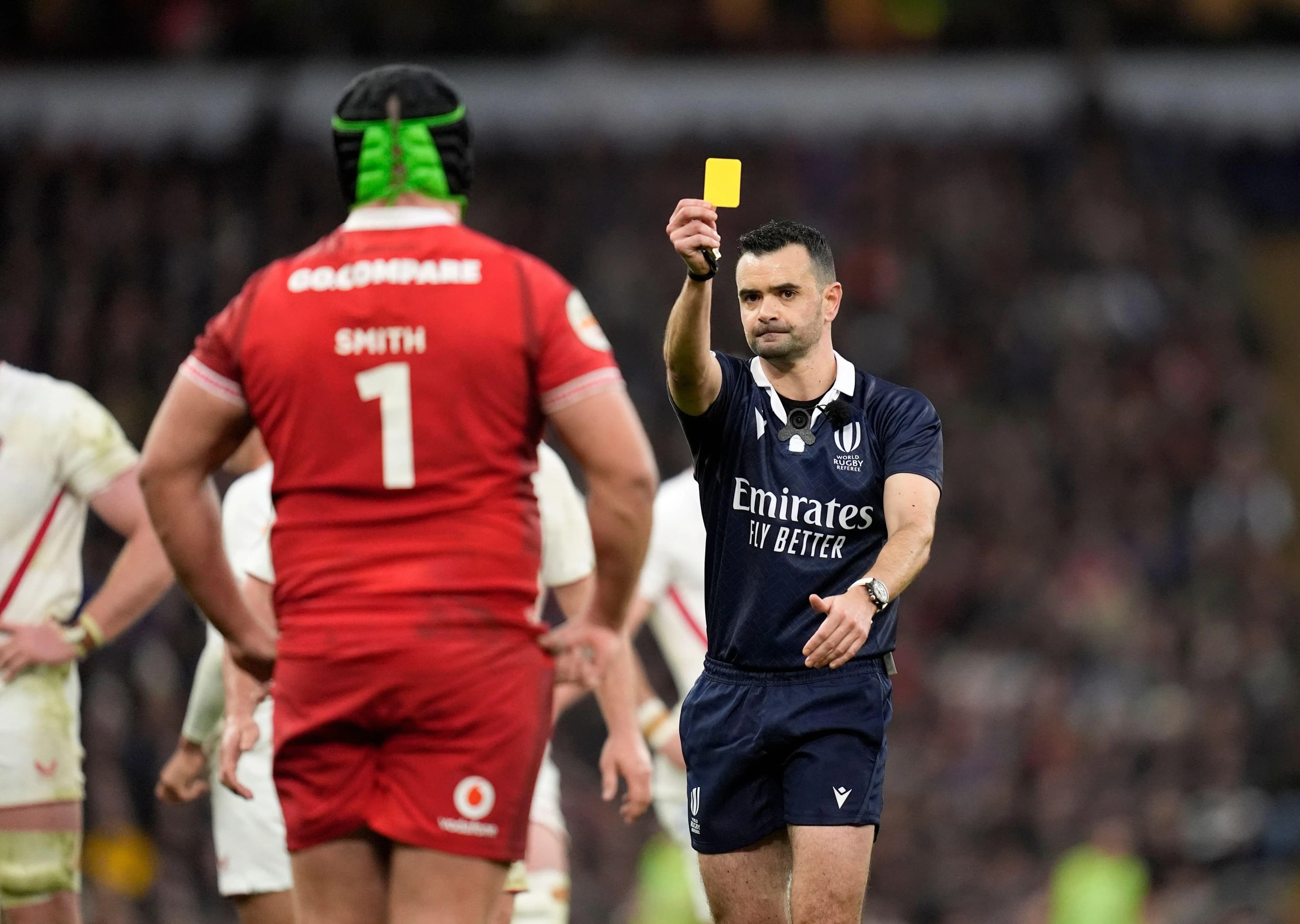
Wales conceded seven tries, had a record four players sent to the sin bin, and conceded an astonishing 10 penalties in the opening 20 minutes.
It was almost as if the chaos, dysfunction and lack of any credible leadership off the field has affected events on it.
It all symbolised the decline of not just the team, but the output of players who have a basic understanding and feel for how Test rugby needs to be played.
England’s playmaker and man of the match George Ford is a natural, instinctive rugby player who is capable of living on his wits, but can also fit comfortably within a game plan.
In contrast, Wales now look a collection of individuals with no basic understanding of the requirements necessary for international rugby, or even the basic skills to base that understanding upon.
Skipper Lake did not attempt to sugar-coat the defeat afterwards, admitting Wales had failed to live up to what they had promised themselves during the build-up to the game.
“Look, we are massively disappointed in ourselves, really, in what we said we were going to do,” Lake said.

“What we practiced through the week, but we didn’t perform it today. We just said that we’ve got to be disappointed in ourselves.”
Wales were reduced to 13 men for large stretches of the match after collecting four yellow cards, a tally that underlined how quickly their afternoon unravelled.
Lake acknowledged that his side could not afford such lapses, particularly given their current standing in the international game.
“We can’t expect things to go our way all the time. We have to make it happen,” he said.
“We’re not a team that’s going to get the rubber of the green at the minute or going to get a 50-50, so we have to be squeaky clean, and we weren’t.
“You know, played large amounts of that game with 13 men and yeah, we spoke all week about discipline and we let ourselves down in that area massively today.”
The problems arrived early. Wales struggled to impose the game plan they had worked on, conceding penalties at the breakdown and around the kicking contest.
Lake pointed to small moments that quickly snowballed into a decisive disadvantage.
“When we stuck to our game plan, we really got some joy out of it, early doors,” he said.
“But just little offsides or a couple of penalties blocking the kickers.
“We stacked our penalty count early doors and then another two at driving line out time and you end up in two yellow cards.”
From the outside, former Wales fly-half now ITV pundit Biggar was equally forthright in his assessment, questioning the intensity and accuracy of Wales’ opening-half display.
“The level of that performance in the first half was nowhere near up to standard for international rugby,” Biggar said.
“Whether it was self-inflicted wounds through penalties, yellow cards, silly errors… the bottom line, that first half performance was nowhere near it.”
While Wales showed more resistance after the break, the damage had already been done.
Tandy echoed the theme of self-inflicted damage, stressing that the coaching staff felt the team had arrived in London better prepared than the performance suggested.
“There was a lot of good in what we did, but today I believe a lot of what happened was self-inflicted,” Tandy said.
“Which is really disappointing for us because we felt we’re in a good place where we’re coming into the game.”
He added: “Coming to England, if we’re going to go down and lose four yellow cards, we’re very inaccurate when we did get any sort of field position, then you’re always going to be on the tough end of the scoreboard.”
Despite the heavy defeat, Tandy framed the result as part of a wider rebuilding process, albeit one that demands honest reflection.
“It’s part of the coaching, it’s part of the game, and again, it’s part of our journey and where we need to go, where we are for a reason,” he said.
“But again, it’s making sure that we reflect really hard on it.”
Nothing went Wales way in the first half as they have away 10 penalties and a free kick, conceded four tries, picked up two yellow cards and ended up trailing 29-0 at half-time.
Ford opened the scoring with a penalty in the second minute after Sam Underhill had charged down a kick out of defence by Wales to set up a strong position.
Then, back-to-back penalties allowed England to move from their 22 to the Welsh 22, where Arundell grabbed his first try.
Ford’s conversion made it 10 points in as many minutes before Nicky Smith and Lake picked up yellow cards in the space of two minutes after a final warning from the French referee.
Down to 14 men – Rhys Carre and Liam Belcher had to come on straight away for a scrum as Alex Mann and Eddie James gave way – Wales were sitting ducks and Arundell picked up his second try before Ben Earl powered his way over.
Ford converted Earl’s score to make it 22-0 in the 24th minute.
It got worse when Arundell pounced on a Ben Thomas pass that hit the deck to notch his hat-trick just before the break, with Ford’s conversion making it an even bigger interval deficit than in last year’s game in Cardiff when England led by 26 points.
England flexed their muscles early doors in the second half with Tom Roebuck getting their fifth try at the posts four minutes after the restart.
At 36-0 Wales needed to find something to restore some pride and they found a way.
With their best passage of play they worked their way up to the England line and finally exerted some pressure.
So much so that England conceded a yellow card for offside, their recently arrived captain Maro Itoje getting 10 minutes in the sin bin.
Wales took full advantage and a kick pass from Dan Edwards to Josh Adams on the left wing finally brought a try in the 52nd minute. Edwards added the extras.
Two more yellow cards, one for Ben Thomas in the 66th minute and then another for Taine Plumtree in the 68th made life difficult for Wales once again.
Thomas got caught ripping the ball after a tackle on the line and then Plumtree was sent to the sidelines for catching Henry Pollock high as he tried to stop him from scoring.
The referee awarded a penalty try but then ruled out another form Tommy Freeman because of a neck roll by Like Cowan-Dickie on Mason Grady in the build-up.
Tom Curry picked up a second yellow card for England five minutes from time for a shoulder charge on Harri Deaves.
That didn't stop the homeside from adding a seventh try at the death as Freeman powered his way over from 1-0 metres out. Ford's touchline conversion hit the post.