Remember when reality TV programmes replaced live sport on public service broadcast channels?
First, those pesky new reality TV stars came for the programme slots, then the lucrative sport brand deals, now they’re coming for sport media jobs.
Sports broadcasting, if not increasingly behaving like reality television, is certainly feeling the effects of its influence.
As audiences fragment and viewing habits shift, rights holders and broadcasters continue to experiment with new ways to hold onto viewers for longer, often (as we’ve seen recently) with mixed results.
The recent move of the Boat Race from BBC to Channel 4 is a case in point.
After 99 years on the BBC (with a brief spell on ITV), the Oxford–Cambridge race found a new home and delivered respectable numbers: an average audience of around one million, peaking at 1.9 million.
READ MORE: Modern Cricket . . . the Biggest Niche Sport in the World
For Channel 4, it was the biggest audience of the day, a solid return on investment, and a reminder that traditional events can still draw a crowd.
In trying to make the coverage feel “more relatable”, the broadcast was patchy.
Strike a light, who would’ve thought the decision to use Made in Chelsea stalwart Jamie Laing as a pre- and post-race reporter would backfire, with a series of on-air mistakes, including, checks notes… wrongly calling the result?
The clip quickly circulated on social media and was filed on a growing heap of sporting TV landfill.
The backlash was to be expected: why rely on a reality TV personality rather than a trained presenter/reporter?

It’s a question that keeps resurfacing as broadcasters explore the tricky relationship between innovation and the mainstream.
Innovate with reality TV stars and influencers? Or stick with the tried and tested journo?
Or even tried and tested formats?
Earlier this year, Sky Sports allowed Wrexham, what some labelled a ‘party political broadcast’.
READ MORE: Welsh Rugby . . . A Love That Endures . . . Maybe
Ryan Reynolds and Rob McElhenney’s commentary on the Swansea City match was deemed ‘self-indulgent, boastful, and tedious… no other club would get the same privilege’, with media commentators accusing the broadcasters of ‘totally abdicating their responsibility to be balanced’.
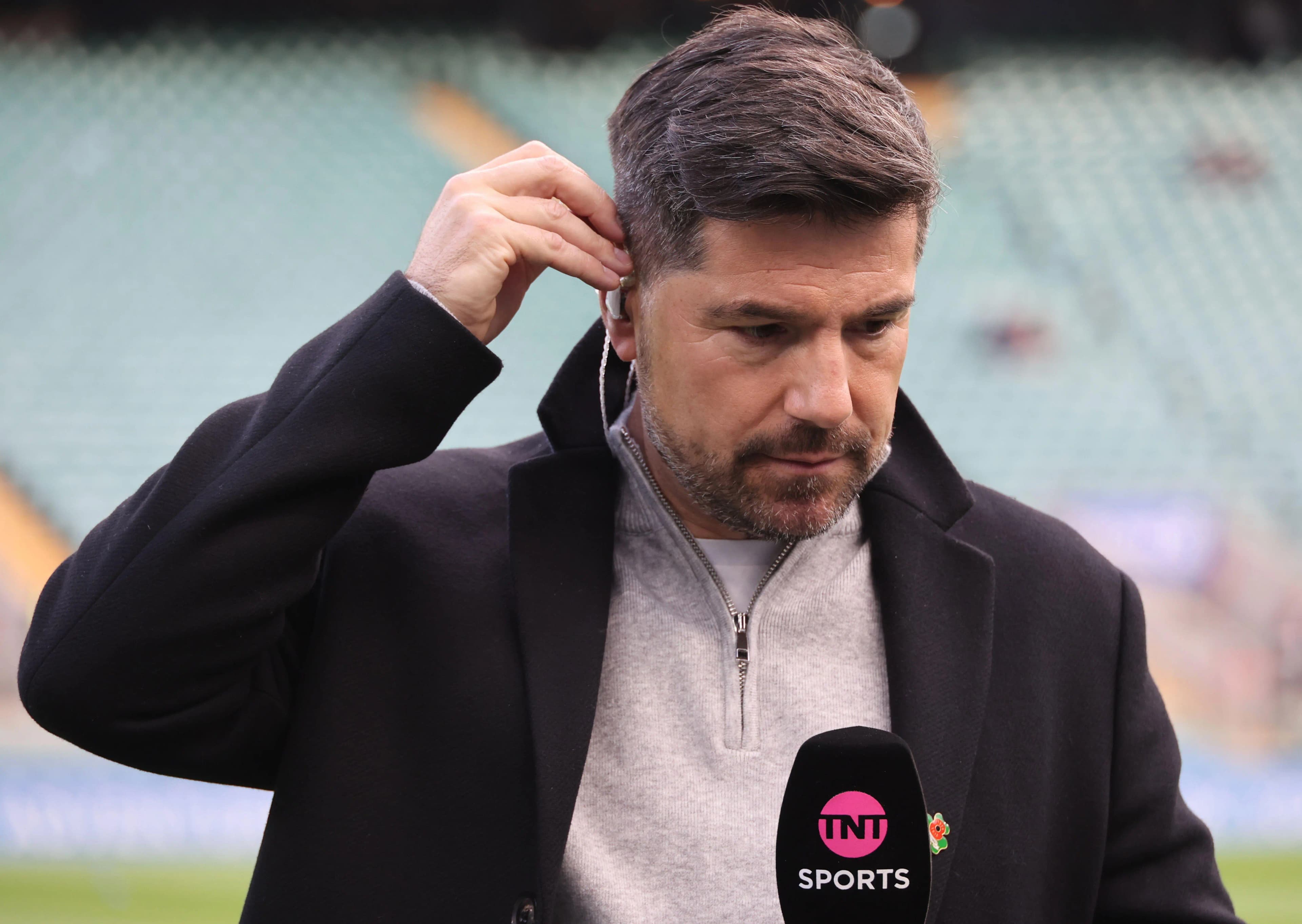
The tension between convention and creativity was in evidence in the recent ‘incident’ on TNT Rugby.
Presenter Craig Doyle encouraged colleague Liam McDevitt to take a touchline kick at goal during the pre-match build-up of the Gloucester–Leicester match.
Leicester coach Geoff Parling abruptly intervened, concerned the ball would land on someone’s swede, shoving the presenter and telling him in no uncertain terms “it’s not f***ing on!”
The clip went viral, generating more discussion than the match itself.
While much pre-match content is carefully choreographed, this moment cut through precisely because it wasn’t (although it seems unlikely the team at TNT Rugby didn’t brief the club beforehand).
It also exposed a growing discomfort within sport about how far broadcasters should go in pursuit of access.
READ MORE: When Rory met SPOTY . . . and Joined Wales’ Pioneer, Dai Rees
On The Sports Agents podcast, Mark Chapman said: “I hate it. I find it uncomfortable for a couple of reasons. I do feel like I’m in the way of warm-ups going on, and that’s their place of work. I feel like I’m in the way, and it’s not the safest. I can understand Geoff Parling being a little bit annoyed.”
In response, Gabby Logan said: “It is this dilemma, especially in rugby. You’re trying to get the sport shown to as many people as possible, in the most exciting way as possible, and explained in a way that makes people want to come in and follow the sport…”
And therein lies the question: how best to broaden interest to new and casual audiences?
Truth be told, audience research shows that the majority of fans join the coverage on, or immediately before, the start.
Moreover, they don’t hang around for too long after the final whistle, either.
Take Sky Sports Super Sunday and the CBS Champions League pre- and post-match coverage, which serve to deliver digital clip numbers as much as curating a narrative around the actual live action.
So, media producers will continue to push production boundaries in the hope of holding audience attention for longer, as well as creating sharable digital clips.
Experimenting and demanding greater access will play into this.
This push for access arguably reached a nadir at the Australian Open earlier this year: Coco Gauff throwing a strop and smashing her racket after she sought privacy away from the cameras before venting her frustration.
The footage still emerged and quickly spread online.
Some saw it as evidence of passion, a rare glimpse behind the veneer of elite sport. Others questioned whether such moments should be broadcast at all, particularly when the athlete had actively tried to avoid being filmed.
Broadcasters will continue to push for more access, more personality, more content.
And as more than one TV sport executive put it to me this week, they (the sport pros) need to understand who pays their wages.
Andrew Weeks is a lecturer in the school of journalism, media and culture at Cardiff University. You can read his regular columns here.