
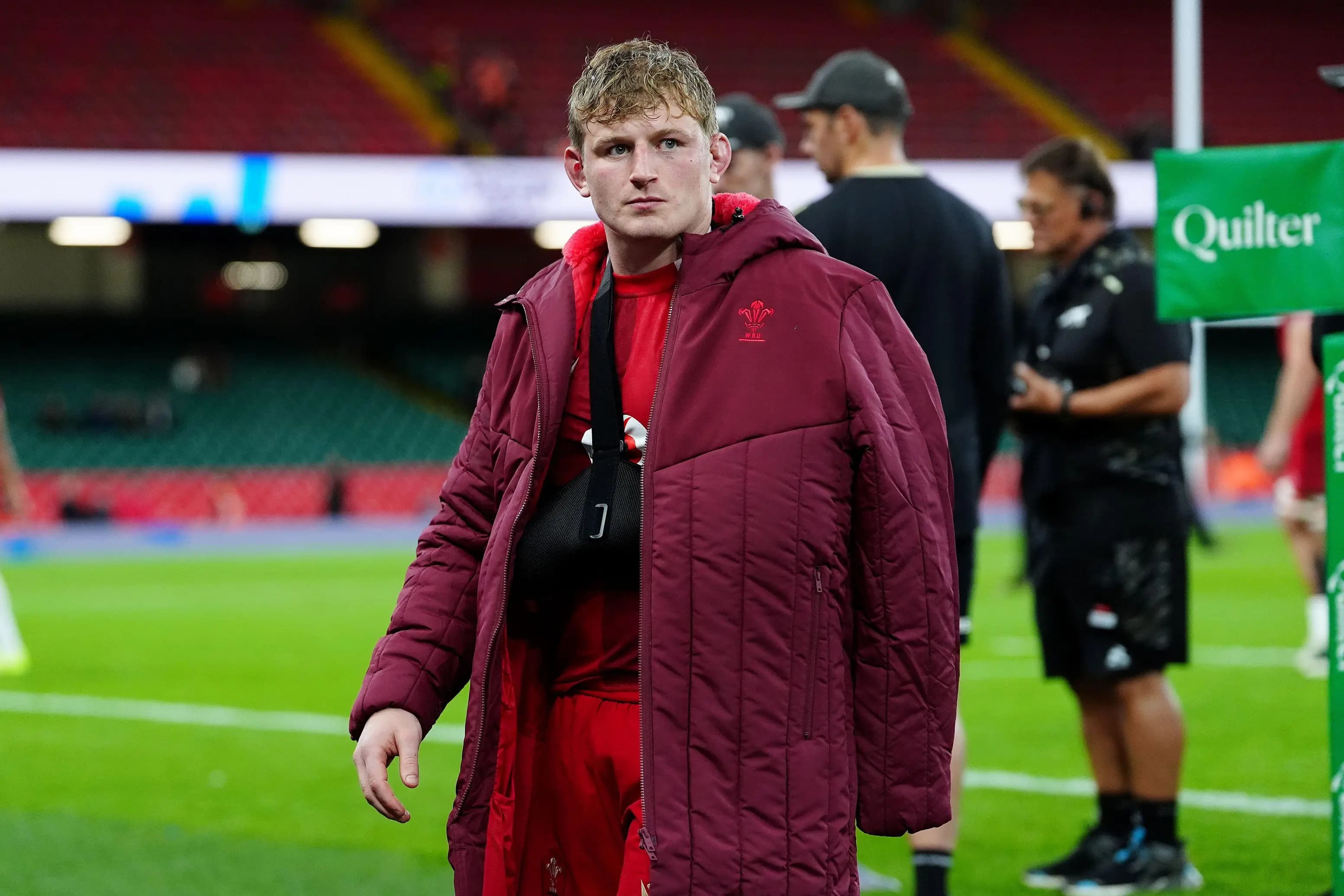

The Welsh Rugby Union are set to again bend their 25-cap rule by counting Lions caps in a player’s total of international appearances.
It means that the injured Wales captain - who is set to join Gloucester next season, along with Wales teammate Dewi Lake - will remain available for Wales selection.
The WRU have long grown tired of their own eligibility rule which they view as outdated and inflexible, even though they don’t want to ditch it entirely.
They have already found loopholes around whether players in England were offered market rate contracts by Welsh regions before leaving - and now they intend to bend the rule in a different direction.
They will claim Morgan’s two Lions caps from his British & Irish Lions Test appearances on the triumphant tour of Australia this summer count towards his tally.
READ MORE: ‘Devastated’ Jac Morgan Faces Fight to Recover Fitness for Six Nations
It’s an entirely new interpretation of their own rule that will upset no-one apart from possibly Morgan’s region, the Ospreys, who still hold faint hopes of keeping their world class back row star should they still exist next season.
The flanker is recovering from shoulder surgery picked up against Argentina in November, a blow that is likely to keep him sidelined until the summer of 2026.
Under normal circumstances, the 25-cap rule would have barred him from continuing his international career the moment he signed an English contract.
Instead, the WRU’s adjustment means Wales will not lose one of their most important players at a time when depth is already under strain.
Morgan’s expected switch to Gloucester comes amid deep uncertainty at the Ospreys, whose future is clouded by WRU plans to reduce the number of professional sides from four to three.
READ MORE: Mark Jones Insists Jac Morgan’s Stance Shows His Deep Loyalty to Ospreys
Although the region have tabled a contract offer, their shaky long-term position made the deal far from secure.
With Premiership sides circling — Saracens being early bidders — Morgan had long been a prime target.
Gloucester have now surged ahead and are closing in on finalising terms.
It is a similar story for Lake, Morgan’s co-captain with Wales and the second high-profile Ospreys leader set to depart.
Lake, at 26 caps, already meets the eligibility threshold, but the backdrop is the same: instability at home paired with more stable offers across the border.
READ MORE: Jac Morgan Eager to Begin Wales Re-build With Coach Steve Tandy
Lake skippered Wales through a demanding autumn series, including the tense win over Japan, a heavy defeat to New Zealand, and a record 73-0 loss to South Africa.
His leadership credentials and physical presence at hooker have made him a sought-after recruit.
When asked about the prospect of landing both players, Gloucester director of rugby George Skivington remained careful not to get ahead of himself, saying:
"When things are all sorted with people in discussions and everybody is happy with what is being said, I am very happy to talk about it.
"But at the moment it is not right to talk about it."
Still, the attraction is clear.
Gloucester already have a strong Welsh thread in their squad, with Freddie Thomas, Max Llewellyn, Josh Hathaway and Wales scrum-half Tomos Williams all part of the Kingsholm setup.

Williams himself is expected to join Saracens next season, opening the door for another Ospreys product, Kieran Hardy, to move in the opposite direction.
For Skivington, Welsh players bring qualities he values both on and off the field. As he put it:
"The proximity to Wales is a real benefit to us," he added.
"I personally really enjoy coaching the Welsh lads. They are good, honest, hard-working blokes.
"There are a good group of Welsh players coming through. They bring a good energy on the field and are serious about their work but also have a good level of enjoyment off the field.
"I find them very engaging and [that they] kind of suit how I would draw a rugby player."
From the Welsh perspective, however, the departures of Morgan and Lake would be another flashing warning light on the state of the regional game.
The push to shrink four teams to three has created widespread anxiety among players and staff.
Contract delays have become normal, budgets have been slashed, and long-term planning has become almost impossible.
For players of Morgan and Lake’s calibre — both national captains, both central to Wales’ future — the need for stability in a short rugby career outweighs the sentiment of staying home.