“Just a reminder to rugby presenters, journalists, and pundits: the potential closure of a rugby club by, effectively, its own national governing body is a rugby matter. Please don’t report on this issue and say, ‘But can’t we talk about rugby?’ You already are”.
The words of Sei Williams, respected author of Welsh Rugby: What Went Wrong (1995–2024)?
Williams took to social media to challenge some members of the media who presumably feel weighed down by the never-ending discourse around inertia and dysfunction in Welsh rugby.
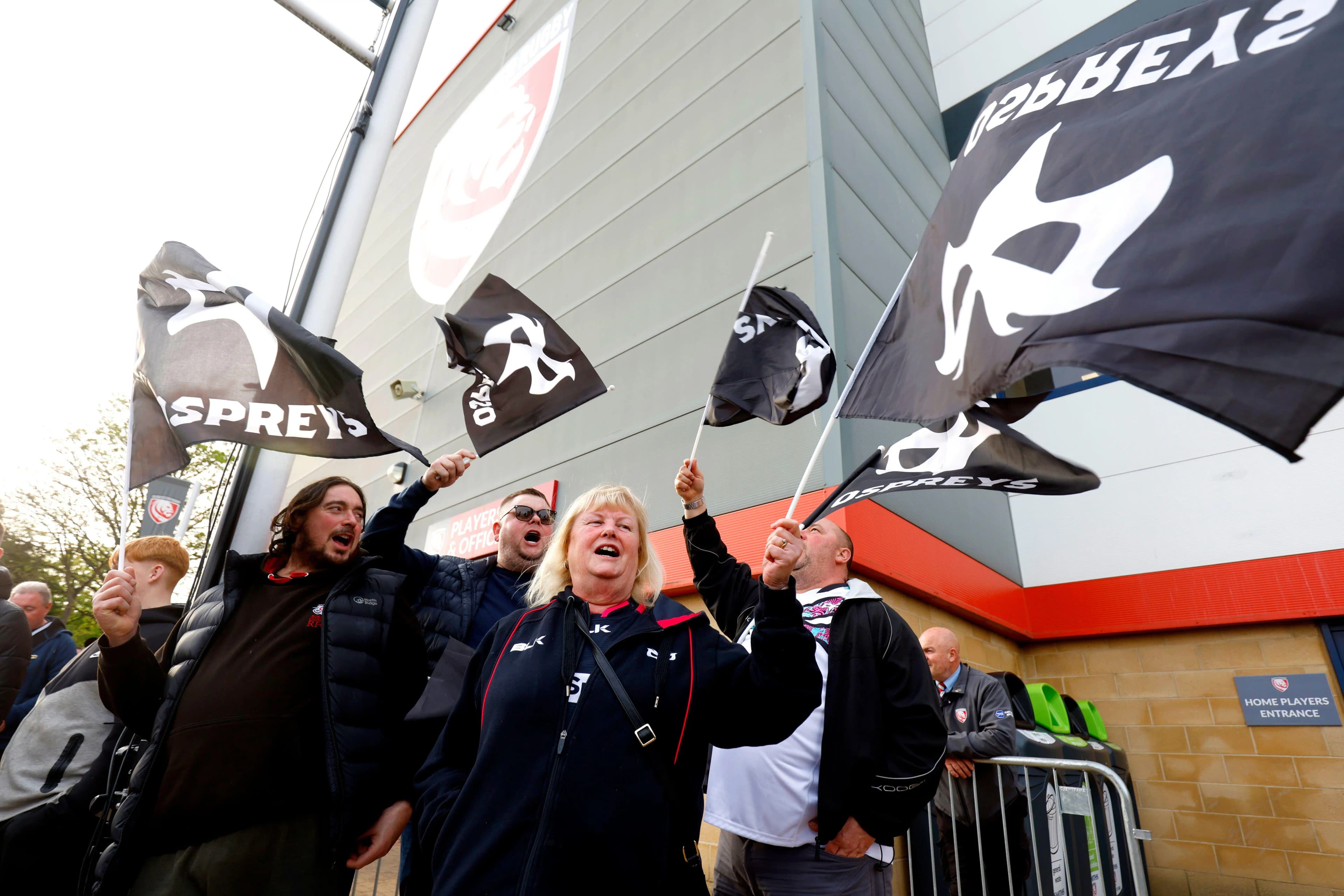
The recent confirmation from the WRU of its intention to sell Cardiff to Y11 Sport and Media, owners of the Ospreys, appears to have pushed many over the edge.
READ MORE: Keelan Giles Backs Ospreys Fans . . . Who Back the Ospreys
Welsh rugby journalists and reporters have long been accustomed to this, it was ever thus, from the onset of regional rugby and probably before.
Long gone are the days of Cloughie sharing a whiskey and swapping bon mots with the East Midlands press corps; Fleet Street journos invited to breakfast with the England football squad at Mexico ’86; or Welsh rugby reporters on the tackle bags during a South Sea Islands tour in the 1980s.
Working in Welsh rugby media in the 21st century requires an understanding of governance, ownership and business.
The same is true of football. Journalists today need far more than tactical knowledge or dressing room access.
To properly explain the modern game, they must understand private equity investment, global multi-club ownership, sporting economics, funding sources, debt regulation…
Ambition makes you look pretty ugly…the defining story of UK sport in the 21st century: rolling out the red carpet to (global) capital.
READ MORE: WRU Facing Extra £14m Bill if They Axe Ospreys
Sporting clubs (and some governing bodies) are increasingly financial assets, linked through complex ownership structures that influence recruitment, competition integrity, and governance (see the recent debate around Liam Rosenior’s move from Strasbourg to Chelsea).
Reporters are required to scrutinise funding sources, debt, and regulation, as well as the small matter of rugby or football matches.
Without economic, financial, and governance literacy, sport coverage risks missing the real forces driving change in the global game.
Life moves pretty fast, and with trust in journalism waning and news avoidance on the rise, noble ambitions like “holding truth to power” are becoming a thing of the past.
READ MORE: Lance Bradley . . . The Man who Raised a Glass While The Ospreys Were Drowned
A former colleague in the media messaged me last week: “Imagine having to report on all of this?” (the Welsh rugby shenanigans).
It’s a state of mind, and there are still some champions in the media set, fighting the good fight.
Graham Thomas’s excoriation of Lance Bradley chief and the Ospreys saga is a must-read on Dragon Sport.
Whilst ‘Laughing Stock: The Collapse of Welsh Rugby, produced by ITV Wales and presented by Matthew Southcombe, is well worth thirty minutes of your time.
Low on budget (these are tough times for TV), high on editorial rigour and ambition, the programme examines how Wales fell to the depths of the world rankings and how, after years of stumbling from one crisis to the next, the Welsh Rugby Union plans to cut the number of professional sides from four to three.

Southcombe asks: how did Wales, once a powerhouse of world rugby, fall so dramatically?
Contributions from Peter Jackson, Ken Owens, and James Hook are impactful and empathetic, attributes which appear to be in short supply in Welsh rugby at present.
Southcombe’s inquisition of WRU chairman Richard Collier-Keywood is impressive.
If only there was more scope to hear from previous WRU executives and board members (if they’d go on the record). It would be fascinating to hear from Steve Phillips, Roger Lewis, Martin Phillips, etc.
Southcombe’s pay-off at the end asks what comes next for Welsh rugby?
Well, the words of post-punk (part-time) Scouser Elvis Costello come to mind: “I can’t forgive you for the things you haven’t done yet.”
Good on ITV Wales for commissioning the programme, and in a week when ITV announced a major new rugby broadcast deal, it will be intriguing to see what comes next.
The broadcaster will keep international rugby free to air in the UK until 2029.
The agreement covers the Six Nations, the new Nations Championship, Premiership Rugby, and key summer and autumn internationals.
Valued at over £80 million, the deal ensures Welsh fans can watch major Test matches without a subscription, a significant moment for rugby’s accessibility in an increasingly pay-tv landscape.
It may also provide an opportunity to bolster ITV’s digital offering and sports journalism, something I, Sei Williams and many others can get behind.
Andrew Weeks is a lecturer in the school of journalism, media and culture at Cardiff University. You can read his regular columns here.