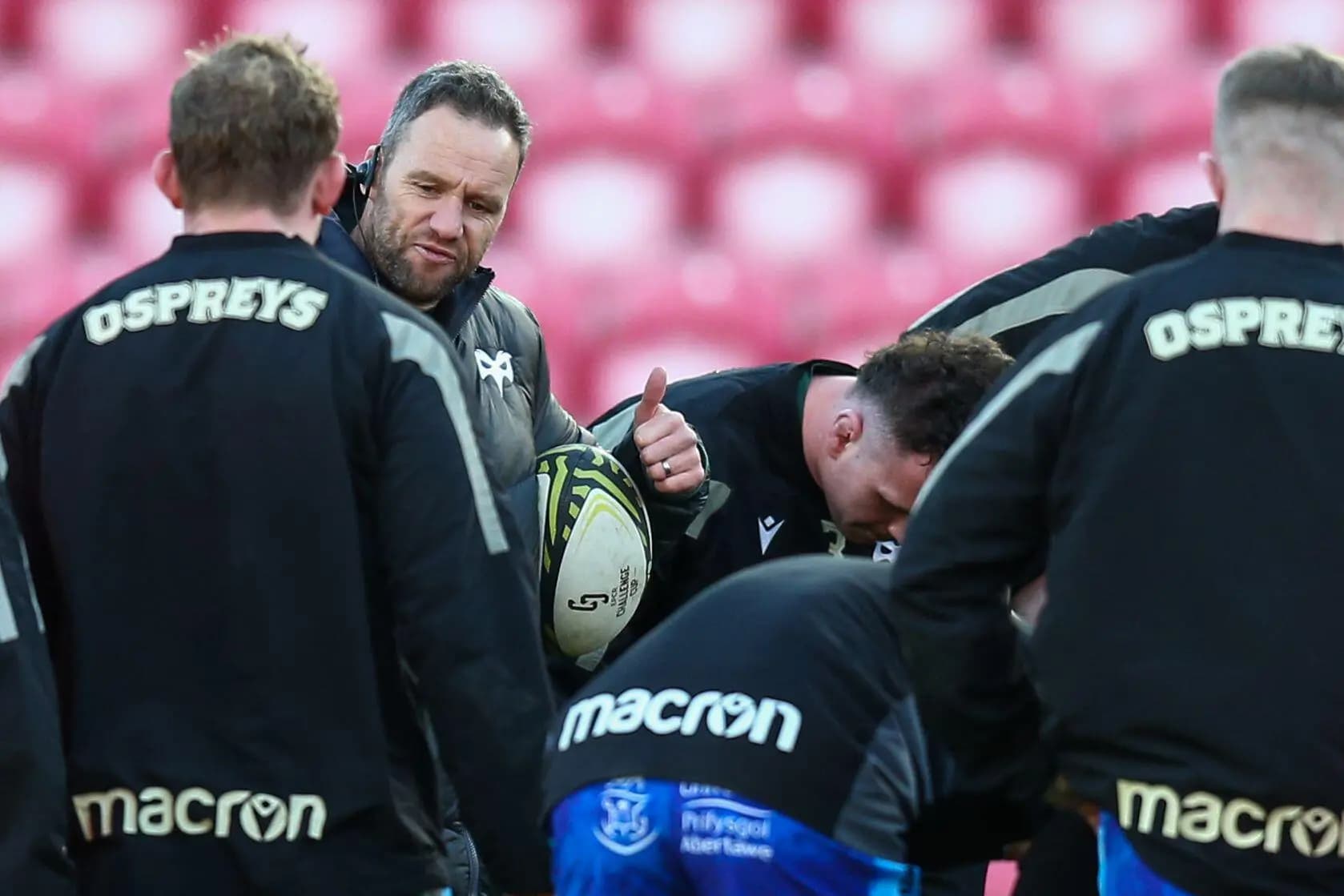
Despite the shadow of uncertainty that hangs over the Ospreys’ continued existence, Jones insisted the performance underlined the defining quality of the region.
“You can never question the spirit of the Ospreys,” said Jones, whose team could disappear off the map if the WRU press ahead for only one professional team to be based along the entire 120 miles of M4, A48 and A40 west of Cardiff.
“It has always been very strong and it is the most crucial cog in any organisation,” said Jones, whose team overturned a 21-0 deficit to secure a bonus-point win in the EPCR Challenge Cup.
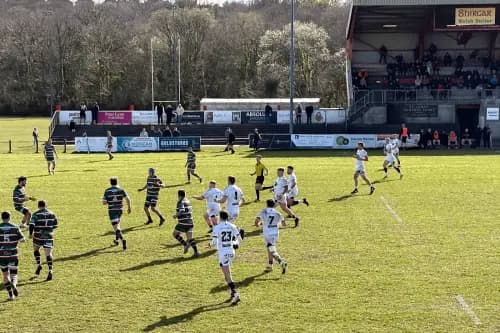
After a calamitous first half — including two yellow cards, four scrum penalties conceded and three tries leaked — the Ospreys looked beaten long before the interval.
Yet Jones said he never believed the game was out of reach.
“I didn’t see us going down 21-0 but I still saw the game being winnable at half-time,” he said.
“When I saw how excited we got around the try at the end of the first half all the half-time talk was about how do we get more of that.”

That try, scored by Harri Deaves from a driving maul in added time, transformed the mood as Ospreys went in 21-5 down. Jones said it was the moment that reminded his team who they were.
“The first time we got out of our half was at the end when we got a try off the back of a driving maul,” he said.
“We got into the right areas in the second half and played more with the ball in hand.”
Before that, almost everything had gone wrong.
Connacht made full use of the swirling wind — “The wind was going sideways and up and down the field and was really tricky,” Jones noted — and punished Ospreys’ errors with ruthless efficiency.
Missing tackles, leaking penalties and struggling at scrum time, the Welsh side looked overwhelmed as Connacht’s Bealham, Jansen and Aungier crossed in quick succession.
READ MORE: The New Big Question . . . Can Welsh Rugby Ever Come Back?
But Jones said the conditions, ill-discipline and the scoreboard never shook belief inside the camp.
“We stayed focused on the job rather than the outcome – and it was a good outcome in the end,” he said.
The head coach pointed to the work done long before kick-off as crucial in enabling the turnaround.
“The non-playing group prepared the side well for the game. If we hadn’t had that in the build up I don’t think we would have won.”
What followed after the break was a complete transformation: the Ospreys became the side dictating territory, tempo and physicality.
Breaks began to open up, possession was retained and Connacht — depleted further when Denis Buckley was sin-binned — were increasingly pinned back.
“We played with a bit more excitement and enjoyment,” Jones said of the shift in energy.
“Any win makes the next training day a bit easier.”
Phil Cokanasiga’s try cut the gap to nine, and when Connacht were forced into passive scrums due to a shortage of front-row replacements, Ospreys pounced again.
Ryan Smith powered over after Ross Moriarty’s pick-up to bring the score to 21-19, before Iestyn Hopkins completed the comeback with a 75th-minute finish in the corner.
“It was nice to see us being composed in the last quarter,” Jones said.
“It was nice to get a full house of points, a real bonus, but for me the more important thing was getting our game right in the second half.”
He stressed that the way Ospreys closed out the match was as significant as the comeback itself.
“In most of our performances this season, other than Glasgow, we have been either leading or in control of for 50-60 minutes. What we then failed to do is control the final 20.
“We did that against Connacht and that’s what I was really pleased about. We finished really strong.”
READ MORE: It’s Them Again . . . Wales Get England in Best Draw Possible at Rugby World Cup