Jess Fishlock didn’t win The Sunday Times Sportswoman of the Year 2025.
Jess Fishlock isn’t BBC Sports Personality of the Year 2025. She didn’t win BBC Wales Sports Personality of the Year. Jess wasn’t named BBC Women’s Footballer of the Year.
Jess Fishlock isn’t the 2025 Ballon d’Or Féminin.
READ MORE: “Je ne regrette rien” . . . Wales legend Jess Fishlock Insists She’s Happy To Wave Goodbye
Nope, there will be no Al Pacino, Scent of a Woman (sympathy) Oscar style glory for Jess.
No end of (Wales) career gong. No belated sop for a stellar career. And so, Jess Fishlock leaves the international football stage without the kind of major individual recognition her career so richly deserves.
I recently wrote about SPOTY; many thanks to the readers who got in touch to tell me the award was an irrelevance, that there are more important things in life, in sport.
READ MORE: End of the Jess Fishlock Era Will See Wales Turn to Nine Uncapped Players
But these awards carry merit. They recognise cultural impact, longevity, influence.
BBC SPOTY is still a big enough draw to coax Rory McIlroy from his Florida mansion to make it to Salford on a rainy December evening.
I’m Worth a Million in Prizes
I like lists, the process of bringing order to cultural chat, a 90s paperback copy of ‘High Fidelity’ burnt onto my soul.
I like the historical legitimacy these awards give us. The recognition of sporting achievement.
And if it’s good enough for a 2009 career SPOTY award for Ryan Giggs, it should be good enough for Jess.
Speaking recently at Terry Yorath’s funeral, Elis James inducted the former Wales player and manager onto his own personal Welsh football Mount Rushmore.
READ MORE: In Praise of Jess Fishlock . . . Wales’ Giver of Goals and Provider of Respect
Well, best keep the little pick ‘n’ shovel handy to cut and shape Jess into the granite, too.
A footballing iconoclast, Fishlock has been in the vanguard of growth, development and change.
A box-to-box midfielder, the first yard in the head. Fishlock achieved what very few do, leading transformational change in her chosen sport.
And a super savvy personal brand awareness building expert, to boot.
No question the recent success of the men’s game was led by Gareth Bale.
Bale was ,of course, standing on the shoulders of giants, and a whole host of champion players; Charles, Southall, Ratcliffe, Rush, Hughes, Giggs etc.
Whilst there are pioneers on and off the pitch in the women’s game, Fishlock has been the focal point.
READ MORE: Why the Ospreys? . . . Why the Crisis? . . . And Y11?
It took some time for the national governing body to catch up with Fishlock’s exploits.
These days the national team play in front of tens of thousands at Cardiff City Stadium. Later in the spring, the team will travel around Wales, north, east and west for the qualifying matches for next year’s World Cup.
It wasn’t always this way, Fishlock winning her 100th cap against Northern Ireland, at essentially a leisure centre in Ystrad Mynach, achieving the accolade alongside the Zumba classes and hot Pilates.

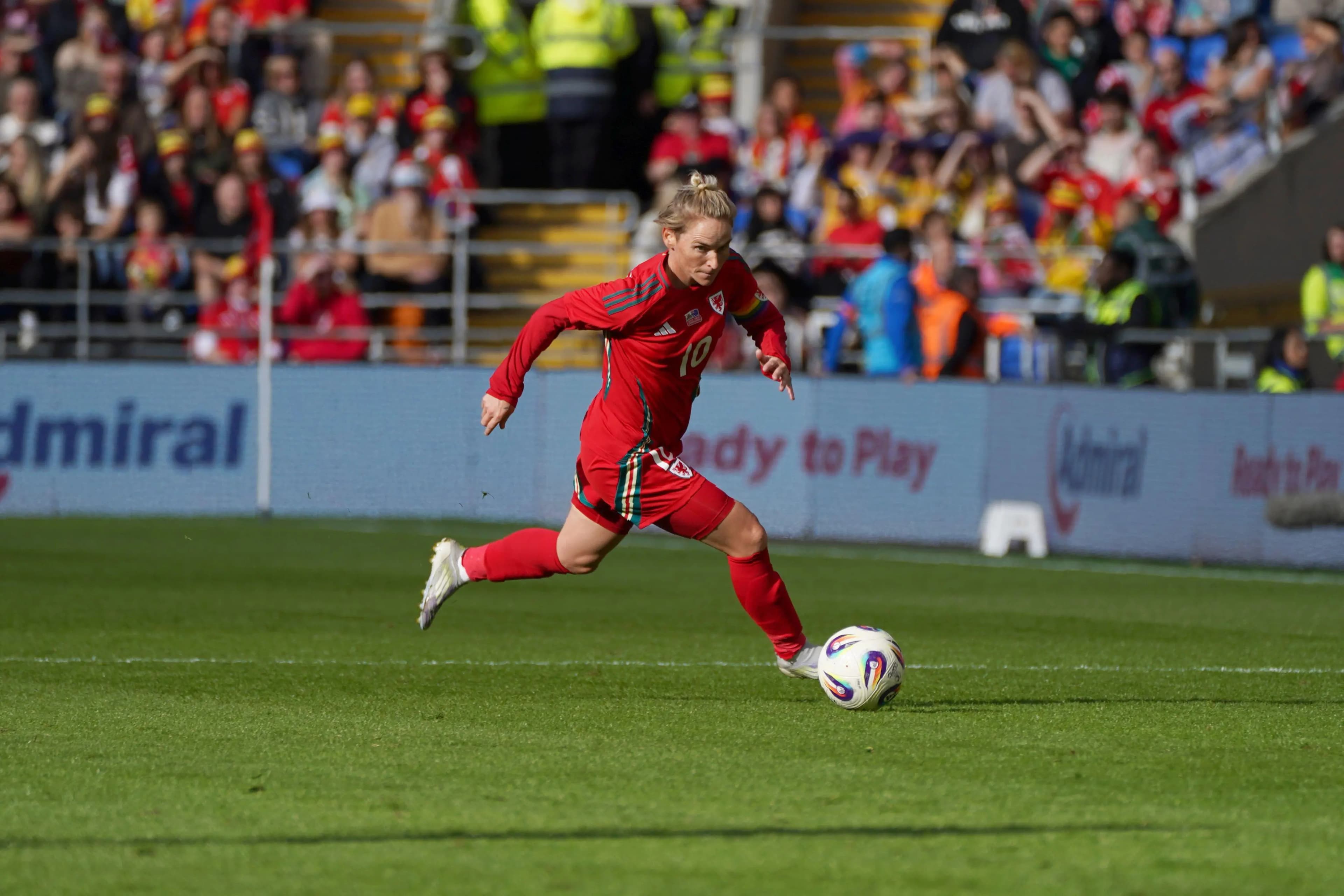
In 2024, she won her 150th cap. She has been Wales’ player of the year five times and is the all-time top scorer with 45.
She’s played in the States, Australia, Germany, Netherlands, France and England. She’s a Champions League winner. And, of course, she led Wales to the Euros last year.
Race for the Prize
The Sunday Times Sportswoman of the Year award has a serious roll of honour; Denise Lewis, Kelly Holmes, Laura Kenny among the winners.
Jessica Ennis-Hill, Gabby Logan, Rebecca Adlington just some of the judges.
Only two Welsh sportswomen have ever won it: Tanni Grey-Thompson in 1992 and Nicole Cooke in 2008.
There are clear parallels between Fishlock and Cooke. Both pioneers. Both operating ahead of their time.
Both normalising excellence long before the commercial rewards followed (for others).
Cooke dominated world cycling before the sport had fully matured, creating the conditions others would later benefit from.
Can we say the same of Fishlock?
Women’s football in Wales has grown exponentially in recent years. But across the border, our neighbours have maximised sizable broadcasting, commercial and funding opportunities to win two European Championships and reach a World Cup final.
Wales cannot yet dream of that scale of success. But Fishlock squeezed every last drop from the system and circumstances she faced.
Wales head coach Rhian Wilkinson understands this:
“I’m hoping she’ll be on the staff in the next camp. She’s instrumental to the culture. I have great Welsh people around me, and we must never lose that.”
In November, at Urdd’s Fel Merch conference at Cardiff City Stadium, Cardiff University students Ella Thomas and Gwenllian Mason asked Wilkinson who was her greatest inspiration in women’s football.
“Women’s football wasn’t on television when I was growing up. I didn’t really have a female inspiration in the game; I looked up to men’s players.”
For a generation of youngsters in Wales, that will never again be true.
And despite the lack of awards recognition for a stunning Wales career, this is Jess Fishlock’s legacy.
Andrew Weeks is a lecturer in the school of journalism, media and culture at Cardiff University. You can read his regular columns here.