- Home
- Horse Racing
- Cheltenham Is The Dream, The Nightmare, And Every Emotion In Between

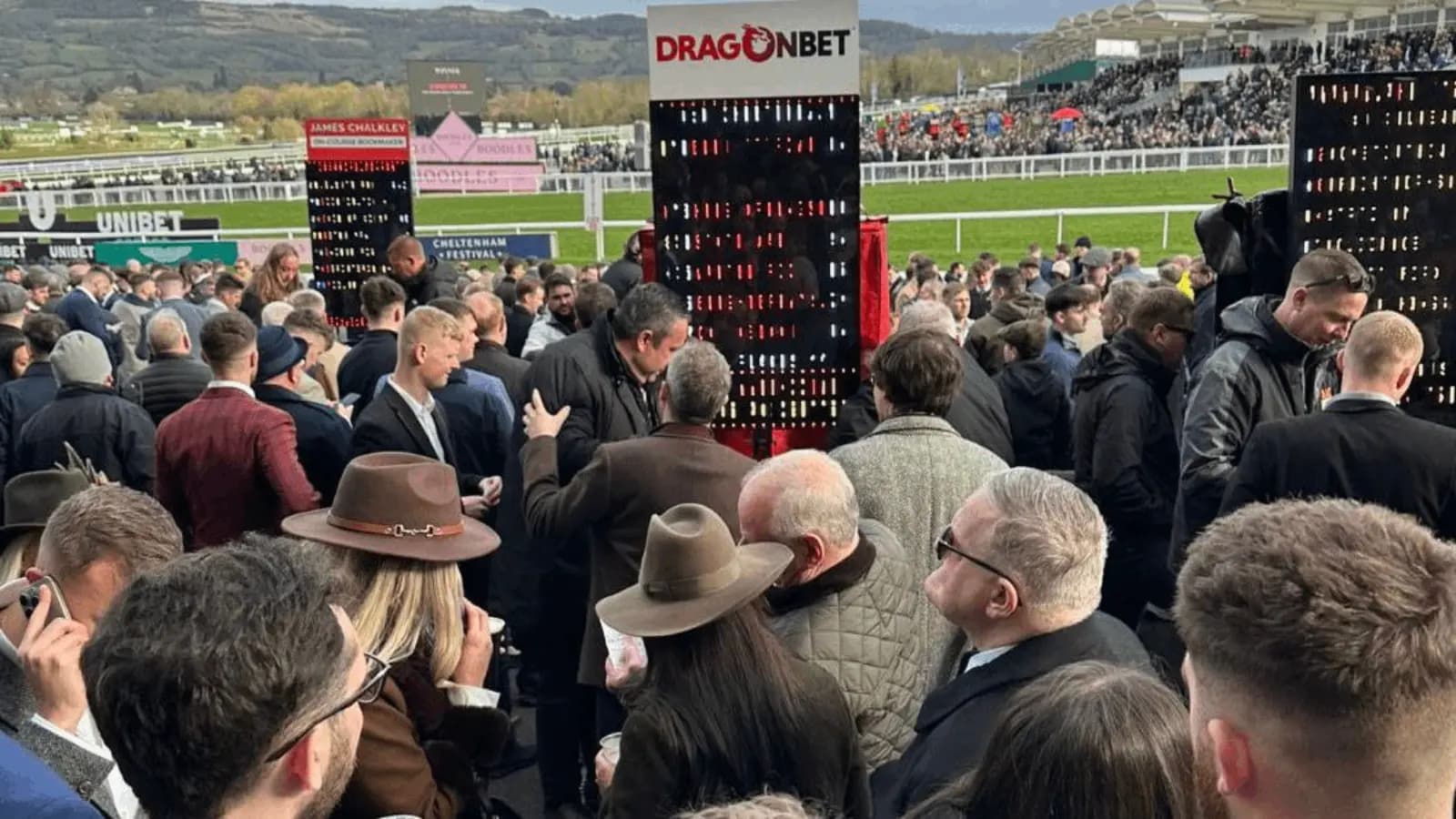
As a small, on-course bookmaker, walking into Cheltenham in March still feels like stepping onto the pitch at Wembley.
Or, for a Welshman like me, the Principality Stadium.
You can do a hundred “big” Saturdays elsewhere, you can have a cracking Ascot, a Glorious Goodwood, a belting November meeting; you can grind your way through wet Wednesdays at Fontwell and quiet Fridays at Ffos Las — but nothing, absolutely nothing, prepares you for those four days in March.
On the drive up, you’ll know the feeling: that odd mix of excitement and dread that makes you talk a bit sharper than you mean to, check the same numbers twice, and convince yourself you’ve forgotten something important even when you haven’t.
Your stomach’s doing cartwheels, your mind is already in the betting ring, and you’re desperate to get the board up and get stuck in.
Cheltenham doesn’t start on the Tuesday. Not really. It starts the minute the last race finishes the year before.
From that moment it sits in the back of your head like a low hum.
You’ll be pricing things up in the shower, replaying last year’s horrors and heroics in the car, thinking about what you’d do differently if that same gamble came again.
READ MORE: A Small Bookmaker's View Of A Big Problem For Racing
It turns into an obsession that grows and grows as the calendar creeps towards the Supreme Novices’ Hurdle, and that roar — the one you feel in your ribs before you even hear it properly.
And the truth is, for small bookmakers, it can still make or break you.
People sometimes picture racecourse bookmaking as a bit of theatre — colourful characters, lightboard prices, a bit of banter. And yes, Cheltenham is theatre.
But behind the theatre there’s a hard economic reality. Those four days are so disproportionately important because they compress an entire year’s worth of opportunity into one concentrated burst of footfall, stakes, emotion, and turnover.
Cheltenham is the only week where a modest, family operation can stand shoulder-to-shoulder with the big boys and actually feel the betting ring working the way it’s supposed to.
The markets are alive. People are there to play. The punter who has a score or bullseye most Saturdays will have a oner or monkey on at Cheltenham.

The lad who usually waits for a price might take what he sees because he’s caught up in the moment.
And the serious money — the confident, well-informed money — turns up too, because Cheltenham is where reputations are made and bookmakers have to take a stand.
That’s why the four days have such a material impact on the year — not just financially, but mentally.
If you come out of Cheltenham bruised, you don’t just lose money — you lose momentum.
You tighten up. You second-guess. You spend spring trying to recover, summer trying to steady the ship, and autumn telling yourself you’ll make it right next year.
A bad Cheltenham can cast a shadow that hangs about far longer than it should.
But a good one?
A good Cheltenham gives you oxygen. It buys you breathing space. It lets you invest, pay bills without flinching, take the long view, and walk into the rest of the season with a bit of confidence in your chest.
For plenty of small firms, those four days can represent the difference between merely surviving and actually building something.
And because the margins are so fine, the emotional swing is violent.
One minute you’re flying: you’ve built a book you like, you’ve got them in at the “right price”, you’ve traded it well, and you’re holding the money you want — the right customers, the right flow, the right balance.
The next minute you’re staring at a payout line that seems to stretch to the horizon, knowing you’ve just done it in — in style — and you still have six races to go.
Cheltenham is the only place where you can take a monster bet you wouldn’t take anywhere else — not because you’re reckless, but because the ring and the racing demand it.
It’s the only place where you can be paying out fortunes while trying to price the next race, with your head half in the satchel, half spinning, and half in the market.
It’s the only place where you can feel like a genius at 2.45 and a complete idiot by 3.10 — and still have to stand there with a smile and do your job.
That’s why, for me, Cheltenham has never just been about the money.
It’s the people, and the memories they bring with them.
You see faces you only ever see once a year, and they greet you like old friends… right before they try to take your head off with a bet.
You see mini triumphs and mini disasters happening every minute: a lad who’s finally landed one at a price; a syndicate who can’t believe what they’ve just done; a couple on their first Festival day having the time of their lives; and a bloke with that quiet, deadly look who you know is not here just for the Guinness.
And then there’s the place itself — the smells, the sounds, the Guinness Village and the Irish bands, the shopping village, the natural amphitheatre of the track, and that hill to finish where so much can change.
As a bookie, you’re stood on a metal stand on a few yards of tarmac, and you feel the whole sport moving around you: the thud of hooves, the nervous energy of stable staff, the sudden hush before a big race, and then the eruption when the tape goes up and the crowd realises it’s happening again.
That sensation is why bookmakers keep coming back, even when the game gets harder.
But as hard as it gets, the betting ring keeps fighting.
We bet hard online compared to other firms, and we’ll have all the extra places and bet boosts you’d expect from an online operation.
We’re very much in the minority who actually want to take a decent wager online as well.
But in the ring, that’s not the minority: the on-track books won’t restrict you, and they’ll be betting the hardest of all.
If you’re attending, look at the boards, then look at the prices displayed on the big screen — you’ll soon see why those who want value are back and have decided to “come racing.”
Last year was the first year we had “bought back in”, and - after selling the old man’s pitch to launch the DragonBet website and app — we regained our place in the betting ring.
So, 2025 was about the risk, the sacrifice, the “full circle” feeling of returning.
This year, the feeling is slightly different.
This year is about belonging, and making our stand on that hallowed ground.
About remembering that racecourse bookmaking isn’t a gimmick or a nostalgia act — it’s a living craft.
It’s about standing there, taking a fair bet in every sense of the word, and being part of the ecosystem that makes this sport what it is.
It’s about the small firms and family names who’ve done it through rain, recessions, and everything else — and who still turn up at Cheltenham because that week matters.
So yes — I’ll say it as it is: Cheltenham is everything.
It’s pressure. It’s privilege. It’s the best week of the year and, at times, the most unforgiving.
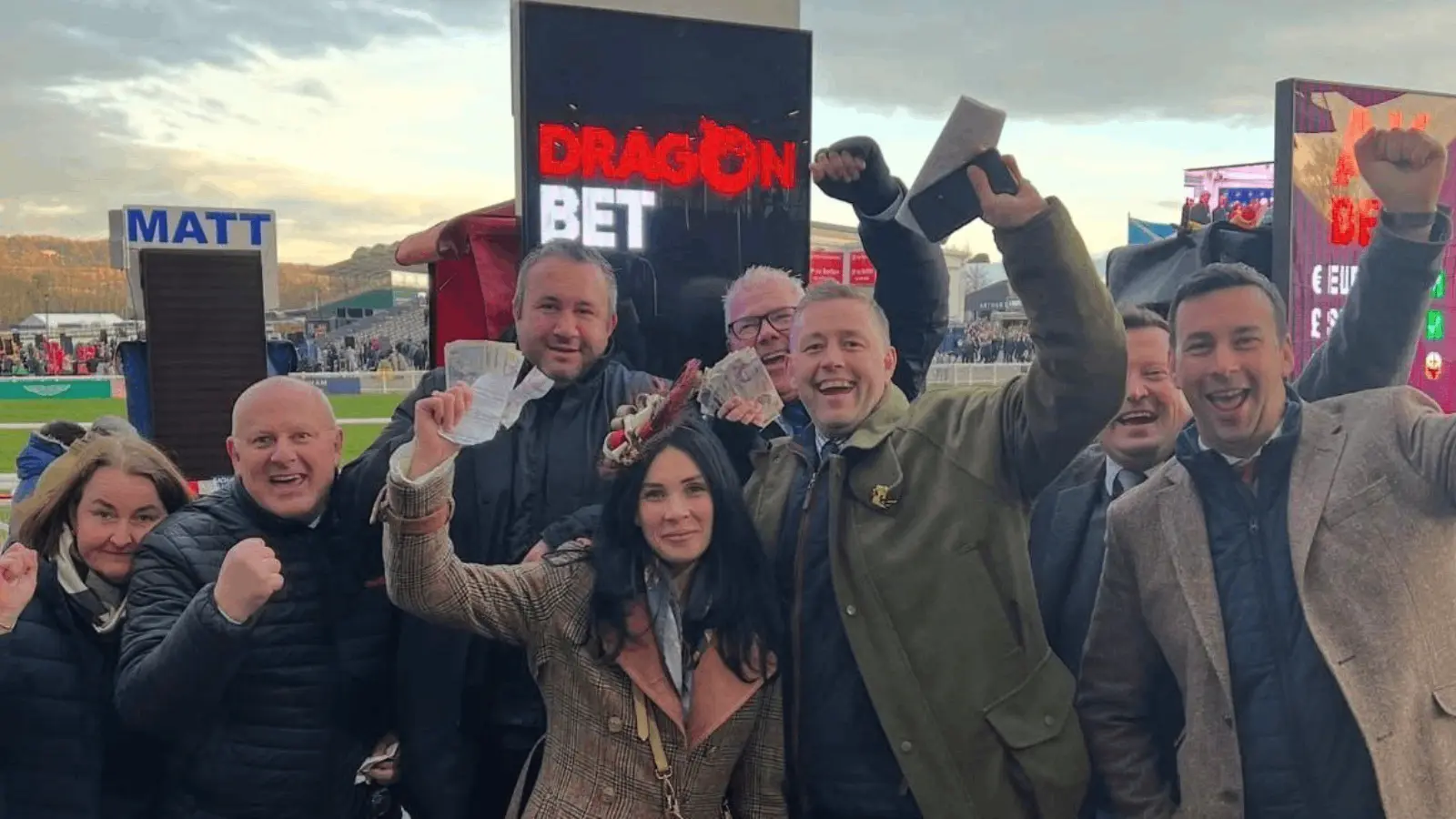 DragonBet staff and punters get in the mood at Cheltenham. Pic: DragonBet
It can hand you a year’s worth of confidence, or it can test every ounce of nerve you’ve got.
But if you’re a bookie — a proper on-course bookie — there’s nowhere else you’d rather be when the roar goes up.
Here’s to the four days that shape the other 361.
Here’s to the battles, the banter, the queues, the triumphs and disasters.
And here’s to making the sort of memories you only ever make at Cheltenham.