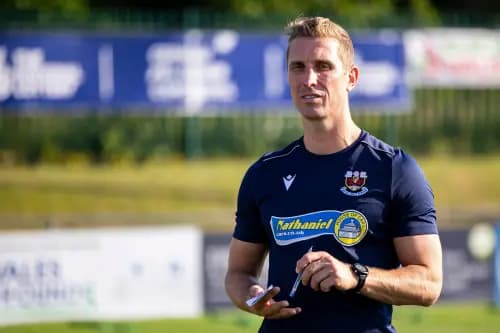

Davies’s lack of club involvement at Spurs has once again placed his situation under the spotlight as Wales prepare for games that will determine whether or not they make the 2026 World Cup finals.
The 32-year-old has made only three appearances for Spurs this season, with injuries and competition for places restricting his minutes, and his contract is due to expire at the end of the campaign.
For Bellamy, though, his skipper’s lack of club action does not diminish his importance to the national side, or raise concerns about his readiness for the high-pressure tests to come.
READ MORE: Craig Bellamy Insists Wales' World Cup Grudge Match With Canada Will Have to Wait
“I’ve always been coy on game time,” Bellamy said.
“A lot of our players haven’t had game time. That’s where we then have to be responsible in respect of management.”
Bellamy has stressed that his’ approach is built around careful physical planning rather than selection based solely on club minutes. With several senior players in similar situations, he said squad rotation and minute management have become essential.
READ MORE: Joe Rodon Backs Ethan Ampadu to Thrive as Wales Captain After Ben Davies Blow
“If it’s Ben Davies or Aaron Ramsey, we have to manage it,” he said.
“That’s the simple fact why we need 30-odd players. I think I’ve used 32 players this campaign, and we have to because we have to continuously keep our intensity.
“I’ve been here a year and a half now and Ben has never been a regular at Tottenham. But I’ve got to be honest, Ben’s been our best player.”
READ MORE: Wales Win World Cup . . . Incentive . . . as Canadian Boss Says Bring on Craig Bellamy
It is a striking endorsement of Davies, who reached 100 caps for Wales last autumn but has endured a stop-start season at club level.
A hamstring injury sustained on international duty in October stalled his momentum, and his only league start came recently in a 1-1 draw with Sunderland, where he scored his first Spurs goal in more than two years.
Davies has admitted his future in north London is uncertain, with French side Nice understood to be interested.

Asked about his situation, the defender acknowledged he has little control over what happens next.
“When you’re in your 30s, you just want to play as much as you can,” Davies said.
“Right now, I got a chance to play and I did my best.”
Bellamy believes that attitude is precisely why Davies remains such a reliable option for Wales, regardless of his club circumstances.
“He was incredible against Canada,” Bellamy said.
“Certain players are top, such good pros. They know what they need and they gear themselves ready for that period.”
The Wales boss dismissed suggestions that a lack of competitive action automatically leaves players underprepared for international football, arguing that elite professionals are capable of managing themselves.
“These boys live it,” Bellamy said. “They train, they manage themselves and know how to manage themselves. Nothing will get anywhere close to a game, but these boys are smart enough.”
He also highlighted the role clubs play in ensuring players are physically ready, even when match minutes are limited.
“Clubs are clever enough to know,” Bellamy added. “If you train small, small, small, and you go to a bigger area the risk of injury becomes higher. So they manage their training load and then we go bigger.”
With Wales facing two matches in a short space of time during the play-offs, Bellamy acknowledged the challenge of balancing intensity with player welfare, particularly for senior figures such as Davies.
“The problem is when we have two games in such a short space of time we have to be conscious that players might get an injury,” he said.
“How we manage the next situation is going to be difficult, but we’re going to have to work out a way to manage it. That’s why the best teams can qualify.”
Despite the stakes, Bellamy was adamant that Davies’ lack of regular football is not an issue that will unsettle his plans.