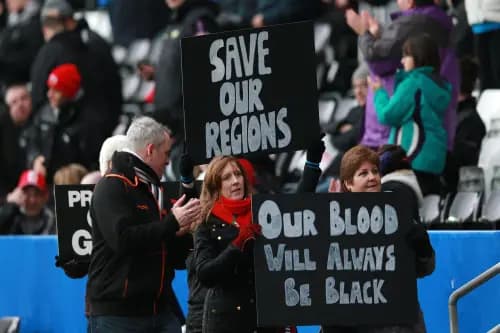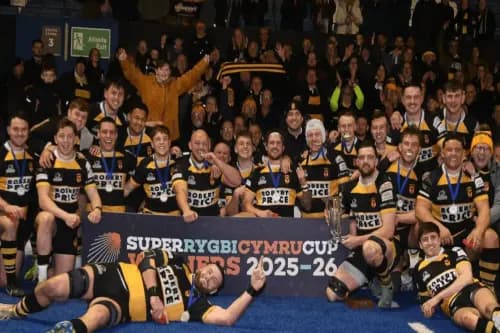

You may have been here before. But as the subject of governance modernisation returns to the top of Welsh rugby’s agenda, Geraint Powell recalls previous failed attempts and sets out the core principles behind any success this time around.
If so many have recognised for so long that Welsh rugby requires fundamental governance modernisation, why has it proven so damnably difficult to achieve?
There has been some useful tinkering in recent years, including the creation of four sub-boards and, following the review by former High Court judge Sir Robert Owen, the addition of two non-executive directors. But the latter actually increased the size of the WRU board from 18 to 20 and further away from the 8-12 person board, based on skill sets, that is now considered best practice.
Vernon Pugh failed with any meaningful governance reform, but it is the ghost of Sir Tasker Watkins VC that towers over this landscape. If a President of the Welsh Rugby Union, who happened to be a retired deputy Lord Chief Justice and senior Presiding Judge for England and Wales, with the highest personal decoration for personal bravery, couldn’t get through his suggested governance modernisation, what hope for others?
This is very personal for me, for whilst on a weekend visit to my parents in Wales I briefly spoke with Watkins between his working group’s report being submitted in January 2002 and it being rejected – i.e. failing to achieve 75% – by the WRU member clubs in May 2002.
I was somewhat disillusioned with Welsh rugby at that time, having lived outside of Wales for over a decade and pretty much confining myself to the use of my father’s debentures for Test matches. The best rugby thing about the periods living in South Africa and New Zealand, with the benefit of hindsight, was that Chris Rattue of the New Zealand Herald had not yet taken to openly referring to the Welsh as “the village idiots” of global rugby.
Despite the best efforts of some, Welsh rugby in 2002 felt like the same old mess as the last shamateur years, just absent the rugby league threat. We were neither a small country model, nor commercially bolted on to the English non-Test professional game. We were the worst of all worlds.
To cap it all, Graham Henry had just resigned as Wales coach, and, whilst Steve Hanson was also a great coach, Henry had far more interest in rugby structures and competition platforms. Would Henry have signed-off on the April Fool’s Day 2003 regional model, if he had still been a successful national coach? I have my doubts.
I had no hesitation in telling Watkins that I thought he “didn’t have a hope in hell” of getting his elitist proposals past a WRU EGM and that he was positively inviting an alternative proposal. My father, who had known him since the 1950s, was squirming.
The then WRU Chairman successfully accepted that invitation, the “general committee” effectively slimmed down from 27 to 18 as the WRU board. If you stamp “cow” on a horse, would that horse become a ruminant? It was still the general committee. And it is still the general committee.
Ultimately, it was a testament to the reputation and standing of Watkins that he “won” 207-204, far short of the required 309 but an achievement in itself. I only met Watkins once more after that vote, and he was magnanimous enough to recall that earlier conversation and to query why I’d felt the way I did ahead of the vote. He was a giant of a man, in a body anything but and probably why his VC wasn’t posthumous as the German machine gunners in Normandy fired over his head.
So, on the basis of better 15 years late than never, and if you believe in an 8-12 person WRU board based on both business/professional and rugby skill sets, what are the six underlying principles that should be adopted to achieve successful governance modernisation?
- 1) Union of clubs
This principle should be at the core of all thinking and public utterances.
The WRU are a union of clubs now, and will remain a union of clubs, and nothing changes in relation to this core principle.
The member clubs own the WRU, both the community game and the high performance professional Welsh Test team “financial engine” that partly funds everything and everybody. They also now majority-own the Dragons professional region. The three residual nominally independent regions would quickly financially collapse without their funding from the WRU.
Some Welsh clubs had owned the WRU, and fed the Test team, for as long as 114 years before the advent of professionalism. The WRU, directors and executives, and not just the lower level employees, are the servants of the clubs and not their masters.
Although all such non-profit organisations will distribute revenues rather than issue dividends, I often think the biggest WRU mistake was incorporating by guarantee rather than, as with the Scottish Rugby Union, incorporating by shares. Framed shareholder certificates throughout the clubhouses of the land would make the point far better.
- 2) Wales comes first
What would happen if the WRU was put in suspended animation for a season, with no Test matches and no money to distribute?
Many of the WRU Premiership clubs and all five of the regions would financially collapse. There would be pain at many grassroots clubs, with no grants and no Test tickets.
So, if the WRU’s national team is “the financial engine” of Welsh rugby, the structures must be built around it. And this includes aligned governance.
Some at the regions and the bigger semi-pro clubs won’t like this unpalatable fact, but they will have very few EGM votes. The Welsh national team is the priority of the WRU board, because of the overriding financial importance of it for all of Welsh rugby.
If our regions and our clubs are not primarily focussed on winning the competitions they are entered in, however secondarily well-disposed they individually and collectively are towards developing players to ultimately make the national team successful, then we have bigger problems than we think.
- 3) Positive vision
WRU Chairman Gareth Davies has positively floated the need for governance modernisation in a candid manner and with impartiality towards whatever final outcome is being sought by those on different sides of the debate.
The only thing that is written in stone is an 8 to 12 person skill-set WRU board, which is undoubtedly required. Future public funding for rugby will be jeopardised unless this is implemented, but a simple “project fear” approach is doomed.
It now needs others to step up to the plate, and to provide a positive vision.
- 4) Devolution/decentralisation through regionalism
As the WRU is a union of clubs, historically perceived as over-centralised in Cardiff, and now with a regional tier above the club game and which underpins the Test team’s player development requirements, the rather obvious positive vision that should generate momentum on governance modernisation is devolution/decentralisation through representative regionalism.
This means not merely replacing the 9 historic districts with 5 regional boards, nicely aligned with the professional teams and the pathway/local authority boundaries, but devolving community game administrative matters to the elected local club representatives.
Practically everybody realises that the WRU board doesn’t have much time for specific community game matters, such is the nature of the modern WRU business.
Why shouldn’t five regional boards run the community game leagues within their regional boundaries? Do we need amateur game cross-region matches, other than the WRU Cups and to preserve ancillary wanted competitions e.g. the Glamorgan Silver Ball?
Why shouldn’t those regional boards vote in a WRU Council to operationally oversee the club game and to operate the WRU Cups and the “A” licence WRU Premiership (maybe also a WRU Championship?) under devolved powers from the WRU board? They can interface with each other through the WRU sub-boards, and one or two representatives – from or nominated by – of the WRU Council, with the requisite skill sets, can sit on the WRU board.
To look at this practically from a club perspective, who would a Dragons region board probably elect and appoint to sit on the WRU and Dragons boards? My guess would be Ian Jeffreys. Which WRU director from District A has the WRU board appointed to the Dragons board? Ian Jeffreys.
A current WRU elected director, whether qualified or not to be further appointed for a slimmed down WRU board based on skill sets, would automatically be amongst those elected to both their regional board and the WRU Council.
This would be a positive modernisation for nearly all. But vague promises of future intentions won’t cut it, as these regional boards will need to be tangible souped-up “super” WRU districts. With real power over the intra-regional community game, whatever is decided regarding the interface with the professional region team.
- 5) Avoid sideshows
There is arguably no greater futility on this planet than losing a war fighting a battle that didn’t need to be fought.
If the WRU can build a 75% consensus in favour of an 8-12 person strategic WRU board based on skill sets, which it should be able to do for the reasons outlined, then don’t do anything that could easily take that number below 75% on contentious ancillary matters.
If anything contentious is included, then always avoid a “take it or leave it” set menu and offer an a la carte menu to preserve the core objectives. This adds complexity, if it cannot be avoided, because obviously some provisions will be inextricably linked to other provisions.
When it comes to governance modernisation, when faced with a perceived bad status quo or only a limited improvement, some in favour of modernisation will stick with the status quo to ensure proper modernisation remains a burning issue.
The sideshow to avoid above all else is the vague “separating the professional game from the amateur game” tangent. No two proponents of this measure advocate the same type of split, when you cross-examine them, and there are so many different types.
As sports governance academic Dr Ian O’Boyle of the University of South Australia in Adelaide succinctly put it, in the context of his New Zealand sporting case studies:
“With the evolution of the professional game, the NZRU “debated whether professional and community rugby should be separated but decided it would be better being under one umbrella” to ensure an appropriate balance in terms of supplied resources”.
That allocation will always have to be made and, in small countries where the non-Test tier of the professional game has no hope of achieving commercial standalone sustainability without Test match revenue cross-subsidy, let alone the additional Welsh complication of nominal independence, the community game appointing a suitably qualified strategic board to run the pyramid is much to be preferred.
It then just becomes a question of devolving as many community game operational and administrative responsibilities away from that board as possible.
As the private investors in New Zealand do not get a seat on the nine person NZRU board, despite four different franchises having won five of the last six Super Rugby titles, great caution should be exercised about offering the private investors a seat on the WRU board.
It will appear like rewarding failure, at the same time as trying to sell a decline in club representatives from 17 to between five and seven (one per region board and perhaps two elected nationally and/or by a WRU Council).
Many would argue that it is more important at this stage to get WRU directors onto regional boards than vice versa e.g. Ian Jeffreys on the Dragons board rather than David Buttress on the WRU board.
Representatives of the private investors in the regional game should attend the high performance game WRU sub-board, but providing them with a seat on the WRU board at a later date is a matter better left to and proposed by a smaller strategic WRU board in the future.
And probably after the current non-Test model has been replaced by something more sustainable.
- 6) Avoid needless conflict
And above all else, avoid needless conflict!
When Welsh rugby factions dig in over contentious issues, they tend to rapidly head down deeper than Viet Cong tunnel networks.
So, in the example of an unwanted high performance game versus community game conflict listed above, if that “Pandora’s Box” is needlessly opened, it will soon descend to abuse over “incompetent benefactors” versus “gravy train blazers”. Many community game representatives will react against, and some regional fans can never have their hopes and expectations met in this regard.
This governance modernisation should concentrate on best practice in relation to what the WRU currently is and does, with devolution through regionalism a momentum-generating process that can help secure reform whilst empowering member clubs in relation to local issues without creating unease or fears over any unwanted power grabs elsewhere.