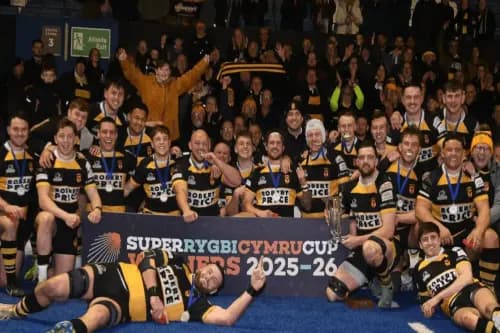

The British and Irish Cup could be the most unloved tournament in rugby history, but Geraint Powell insists it doesn’t have to be this way. But, he argues, it requires a change of outlook as well as of the participating teams.
“Events, dear boy. Events.”
Harold MacMillan memorably described the greatest difficulty with his job as Prime Minister as the ever present risk of being blown off course.
I suspect that Geraint John, the Welsh Rugby Union’s head of performance rugby, currently empathises with Supermac.
When I read in the Irish press in October that the English Championship clubs were about to ditch the British and Irish Cup, rendered both commercially and rugby development-wise, pointless for them by the recent Welsh attitude towards the competition platform, I confess that I audibly gasped.
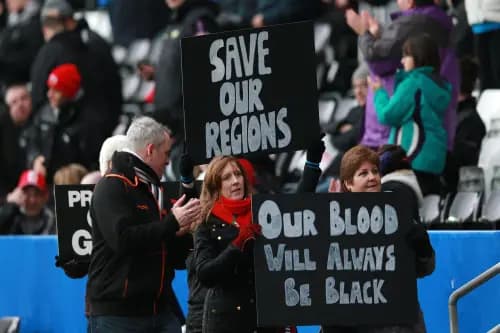
What was already building-up to be an incredibly divisive and potentially explosive review of the role and composition of the WRU Premiership would now be super-charged with a wider pathway remit and have to confront the most contentious identity issues in Welsh rugby – the ones that successive WRU senior executives have tried to avoid since 2003.
Many of the issues were fudged that year, and for the most part since, leaving a distinctly “super” club hybrid feel to our troubled and unloved regional rugby model.
Should the non-Test tier of our professional game be representative regions aligned with the Pro14 countries, preferred by the WRU club membership?
Or should it be historic city clubs as honorary English clubs in the English league, preferred by the biggest funding directors – seeking greater autonomy, if not less funding – and many of the fans of those historic clubs?
It has to be representative regional rugby, for a whole myriad of reasons, including, but certainly not limited to, English disinterest. But our commitment to the Pro14 has ended-up being half-hearted.
It has led to a perception amongst many Irish rugby stakeholders that we are unreliable commercial partners, exemplified by our current participation in the unsuited Anglo-Welsh Cup and also by our stance at the time of the demise of the former Heineken Cup.
There is clearly too large a gap between the professional regional game and the WRU Premiership, in some if not all aspects of rugby.
Both the cynics and the conspiracy theorists will roll their eyes and refer to the British and Irish Cup being removed from the clubs and the talent being diluted across 16 clubs – plus Pontypool – and query what else was expected?!
None of this mess should have happened at all, for the professional era Welsh rugby pyramid should have been a simple construct on a blank piece of paper.
It is hardly rocket science that one professional representative region is required to service North Wales, with three more regions to service Gwent, eastern Glamorgan and then Swansea/all rural points west.
All four professional representative regions would have their own “A” team, to carry the player development burden, initially in competition with the Irish over 14 weekends until Christmas.
And then a low wage – but not unbridgeable amateur – semi-professional WRU Premiership that the club fans actually want. That would be 16 clubs with a double round-robin 30-match league season and the regional “A” team players available from the turnaround point for the second half of 15 matches of the season. The WRU Premiership would benefit certain positions more than others.
And then, probably slowly progressing, at a pace acceptable to the fans, to a full “A” season.
But, this being Welsh rugby, regionalism was mostly not embraced.
And to a sufficient extent that former WRU chief executive David Moffett warned in 2014 that until the regions – with his Ospreys exception – could demonstrate their ability to run one team along regional lines then they should not be given additional powers that come with controlling an “A” team and to do so would demonstrate the WRU’s lack of understanding of the realities of regional rugby and would be putting the cart before the horse.
These were reasonable points, well made. Three years later and we are now faced, as a result of the demise of the British and Irish Cup, and the wider pathway implications, with the prospect of how the horse pushes the cart from behind. The issues practically nobody would recommend confronting this season will now have to be confronted.
The least awful pathway strengthening option is likely to be premature regional “A” teams, some even anti-regional, in effect “super” club options in some regions.
We know in several regions these “A” teams will be absolutely hated by many rugby fans and will be a commercial disaster watched pretty much only by the friends and families of the players. We have not sufficiently embedded regionalism in Ospreylia and Gwent, let alone elsewhere.
Trying to embed “A” teams before embedding regionalism will do enormous reputational damage to the WRU. That much is certain.
The alternative for pathway strengthening, which is even worse, is to completely wreck the WRU Premiership and reduce it back down to eight clubs plus probably the RGC development region.
Assuming two clubs per region would be the preference that would mean a franchising system and all manner of controversy over the selection of the chosen clubs and the franchise duration.
As the relevant region cannot be impartial when it comes to the Cardiff, Bridgend and Llanelli clubs vis-à-vis the other clubs of that region, would good governance mean excluding those three clubs as candidates for inclusion in such a small pathway driven WRU Premiership? It should.
So, by default, the Scarlets would be left with Carmarthen Quins and Llandovery and the Blues would be left with Merthyr and Pontypridd. That’s the easy bit.
If Swansea and Neath were prepared to relinquish their token shareholding in the Ospreys, how would we choose the two clubs from them and Aberavon? Who would objectively decide?
And as for the Dragons, they have five current Premiership clubs and Pontypool in the mix for two franchises. Much of the recent feelgood factor in Gwent rugby, with the transformational change at the Dragons, will go up in smoke as the mud-slinging and recriminations begin.
And whilst all this ill feeling is going on, the likelihood of a 75% approval for the critical WRU governance modernisation will be falling by the day. You don’t need to be Albert Einstein to know at which vote anger will be vented against the WRU leadership, as “A” licence clubs call in favours.
The British and Irish Cup might have been a waste of time in recent seasons. In fact, it undoubtedly has been for Welsh rugby, but its abrupt demise at the end of this season has created no end of problems for Welsh rugby in having to make far-reaching pathway decisions before embedding regionalism or – as it is otherwise known – being forced to put the cart before the horse.
“Events, dear boy, events”.