
As the Welsh regions rake through the ashes of another European campaign where all four got burned, envious glances are again aimed over the Irish Sea. Geraint Powell isn’t the only one turning green as he considers how Irish rugby has left the Welsh domestic game so far behind.
Older readers will recall the 1991 Five Nations Championship, and a 21-21 draw in Cardiff between Wales and Ireland.
It was the era when the annual fixture had become the “Wooden Spoon” decider, and a draw in 1991 saved both countries from the ignominy of a “whitewash” that season.
Wales were not very good in large part due to a mass exodus of elite players to rugby league, beginning again in earnest from 1985 and reaching epidemic proportions from 1988.
Ireland were simply not very good, without any rugby league exodus excuse, beating Scotland only twice and England only four times between 1984 and the turn of the century.
The advent of professionalism, and the inevitable end of mass defections to rugby league, offered the prospect of a huge relief for Welsh rugby where there was none for Ireland.
And yet, in 2019 in the 24th year of professionalism, Irish rugby now completely dominates Welsh rugby everywhere below Warren Gatland’s over-performing national side.
Ireland is held out as a beacon of a rugby nation that has successfully managed the painful structural transition from amateurism to professionalism.
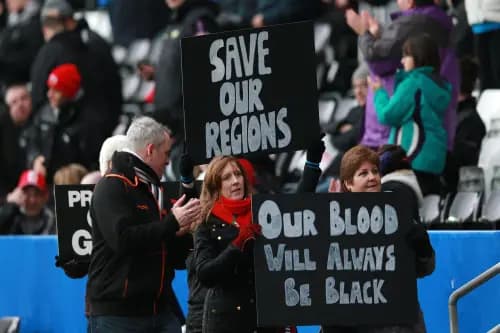
Wales is widely viewed as the major rugby nation that has most botched the same domestic structural transition, since 2003 left with an unloved and unviable hybrid between union supported provinces/regions and benefactor funded ‘super’ clubs branded as “regional rugby”.
It has been a very good weekend for Irish rugby.
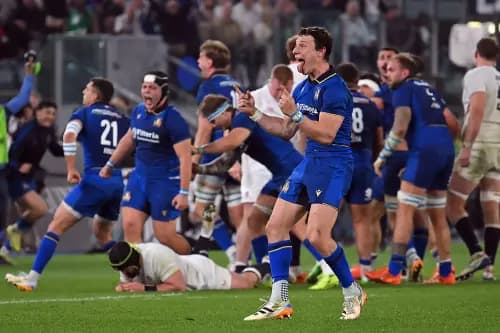
For the second weekend in a row, the Irish provinces completed a clean sweep in Europe.
Leinster secured a home quarter-final in the Heineken Champions Cup by defeating Wasps 37-19 in Coventry, and will welcome to Dublin an Ulster province who secured their own qualification through a 14-13 win away at Leicester.
Munster will travel to Edinburgh, following a compellingly brutal 9-7 win over Exeter at Thomond Park in Limerick.
Unlike any of the Welsh regions, both Scottish ‘super’ district sides have qualified for the quarter-finals and in the main Champions Cup tournament at that.
In the Challenge Cup, a 33-27 away win on Saturday over Bordeaux-Bègles will see Connacht travel to Sale in the quarter-finals.
The 2018 calendar year was a good year for Irish rugby.
The Test team won 11 out of 12 Tests, including a Six Nations Grand Slam and a first Test series win in Australia since 1979, leading in November to a first ever victory over the All Blacks on Irish soil.
Leinster completed a Heineken Champions Cup/Pro14 double.
In fact, it had been a good previous decade for Irish rugby.
Ireland had won the Six Nations three times, including a Grand Slam in 2009.
Ireland had beaten South Africa on four occasions and beaten Australia on three occasions.
Having pushed New Zealand all the way in Dublin in 2013, Ireland recorded their first ever victory over the All Blacks in Chicago in 2016.
Irish provinces had been European champions on four occasions and Pro14 champions on five occasions.
Things have just been getting better and better since Joe Schmidt became Test coach in 2013 and David Nucifora became High Performance director in 2014, the Test team increasingly matching and reflecting the underlying strength of the underpinning provincial game.
So what has been the key to this increasingly sustained Irish success?
What has the Irish Rugby Football Union (IRFU) done and not done?
Favourable Circumstances
It would be churlish not to highlight some favourable circumstances for Irish rugby upon the game turning professional.
Ireland had four historic provinces, long pre-dating rugby union and with identities many people already cared for, and arguably exactly the right number of professional teams. This contrasted with the diversity of the New Zealand/South African provincial game or the English/Welsh club game.
The “troubles” were ending in Northern Ireland, and rugby could and did target the “peace dividend” funding, and the Irish economy has done well in recent decades having carved out a niche role within the European Union in a deindustrialising Europe.
Irish sporting bodies have had an influence over the Irish government, notably obtaining assistance by way of taxation that has been the envy of sporting administrators in Scotland and Wales.
“Don’t do stupid shit”
US President Barack Obama may have introduced his now-famous foreign and security policy mantra – “don’t do stupid shit” – in 2009, but the IRFU had already clearly been following the same dictum for nearly 15 years by that time.
Ireland was a traditional club rugby country, just as with the rest of the Home Unions.
The select teams of the Irish provincial branches had played each other just once a season since 1946 in their annual Interprovincial Championship.
But just as with the Scottish Rugby Union’s four districts and the Rugby Football Union’s counties – later their four divisions – the provinces rather than clubs played the fixtures against international tourists and perhaps most famously Munster defeated Graham Mourie’s “Grand Slam” All Blacks in 1978.
The IRFU did nothing stupid, and the provinces rather than the traditional “big clubs” were used as the correct vehicles for commercialised professional rugby in Ireland.
Munster provincial rugby is not something absurd such as the Cork Constitution club running a Munster provincial player development pathway. Good luck with that in Limerick!
Irish rugby owes a debt of gratitude to the likes of Syd Millar, Tom Kiernan and Eddie Coleman.
With the usage of the provinces, there was no silliness over clubs – effectively independent benefactors – owning player contracts and conflict of interest disputes.
And although the IRFU came perilously close to making a serious blunder in 2003, in the financially vulnerable gap between the expense of players returning from exile and the growth of the domestic provincial game and increased income streams from a redeveloped Test stadium, Connacht were retained as a professional provincial team and went on to win the Pro14 in 2016.
Neither did the IRFU fritter away resources on an exile professional team, given the way professional rugby has developed in England.
Compare with Scotland, which failed to maintain the historic four districts structure at professional level, and the numerous inefficiencies across English and Welsh domestic rugby.
Resource Concentration and Heavy Investment
All of this, together with the incentive of ownership and particularly of control, for the provincial branches are merely a constituent part of the IRFU, has enabled resources to be concentrated at this level and for long-term sustained investment to take place into a small number of teams and stadiums.
A modern Leinster home match at the RDS Arena bears no resemblance to a home match before a small crowd at Donnybrook 20 years ago.
Thomond Park in Limerick has been redeveloped into a 25,600 stadium, Ravenhill in Belfast has been redeveloped with the help of UK state aid, and there are plans afoot to redevelop the Galway Sportsgrounds with Irish state aid.
This concentration of resources has triggered a virtuous circle, as success without impeding affinity problems generates more resources – bigger crowds, more play-off matches, more European meritocracy payments – which in turn have been re-invested into the provinces leading to ever more success and then ever more income.
The contrast with Wales, or rather South Wales, which has dissipated WRU/competition platform funding since 1995 over many teams and stadia, from Caerphilly RFC to the Celtic Warriors, with limited income from much of South Wales and nearly no income from North Wales, without any virtuous circle, has been depressingly stark.
Strategic Control
The final element behind the Irish success story, investment matched by efficiency, has been the strategic control and oversight.
From bespoke player development focussed on future Test requirements, to “project player” imports such as CJ Stander and Bundee Aki, to even moving players between provinces for rugby reasons such as Robbie Henshaw, Joey Carbery and Jordi Murphy.
The IRFU controls the entire player wage structure, eliminating unnecessary domestic price competition that would lead to wasteful inefficient domestic wage inflation.
This enables the creation of a centrally valued equitable and fair wage structure, prioritising retention of the key Test and provincial players who generate the critical wins and income.
The only issue then requiring addressing is the Anglo-French club threat, particularly the difficult decision if a player is targeted at a financial level well outside of the domestic wage structure.
It took a huge sum to entice Johnny Sexton to Paris for two years, and he returned thereafter.
Yes, it’s been a good decade for Irish rugby.